If You Already Wear Our Copper
Thousands of people wear a Willis Judd copper bracelet every day and wouldn’t be without it. If that’s you, this page needs no introduction — you’ve just got a knee that’s asking for something now, and you’d rather it came from somewhere you already trust.
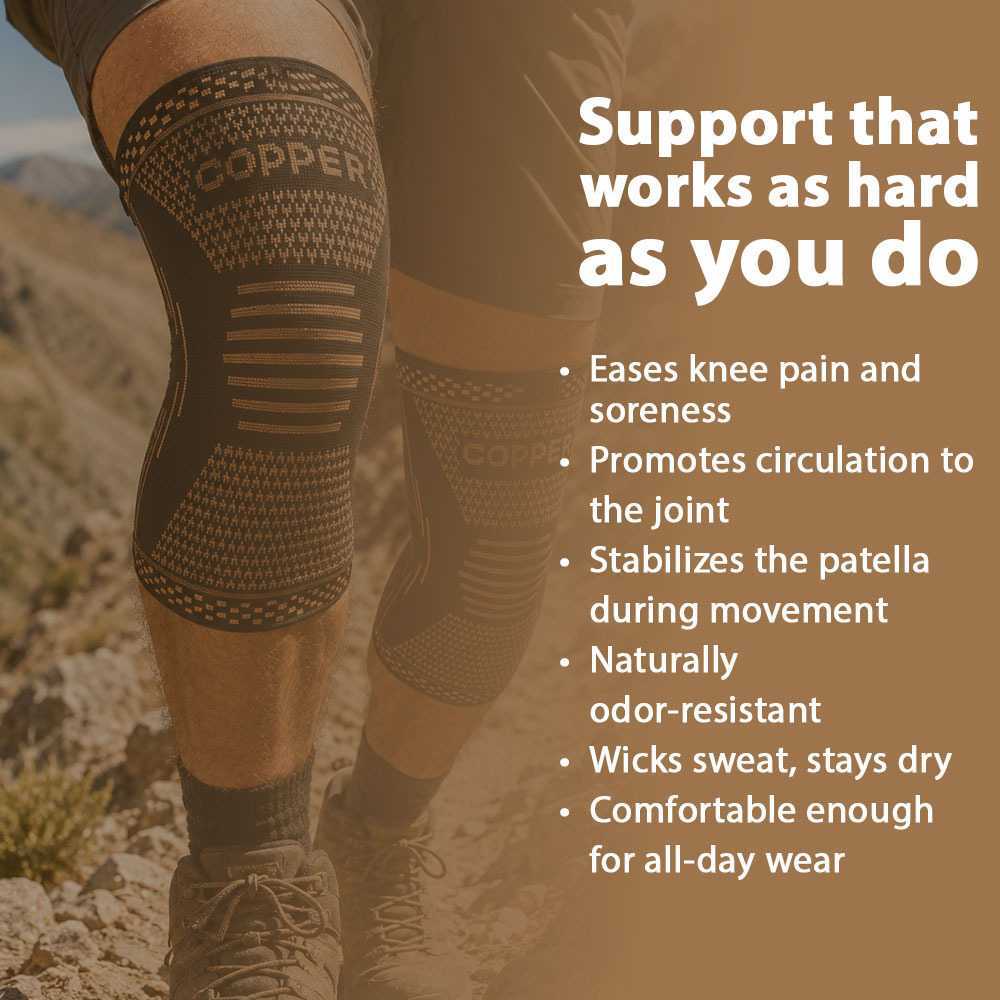
But a knee isn’t a wrist. It carries your whole body weight, every step, all day. So this one isn’t just copper. It’s copper and compression — and compression is the part doing the heavy lifting.

What This Actually Is
Your bracelet sits on a joint you don’t stand on. Your knee is a hinge carrying fifteen stone.
That difference is the whole design. A knee that’s done fifty, sixty, seventy years of walking, kneeling, driving and standing needs holding — steadily, evenly, all the way round, for as long as you’re on your feet.
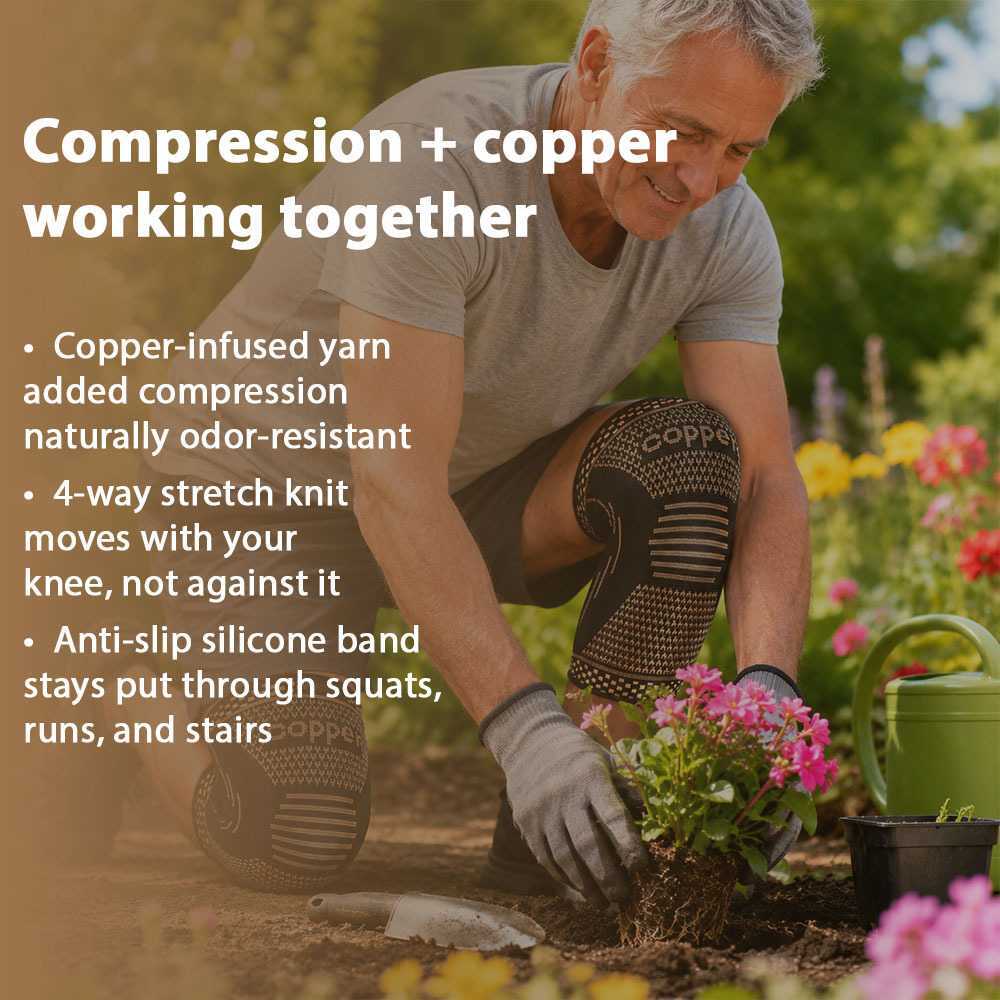
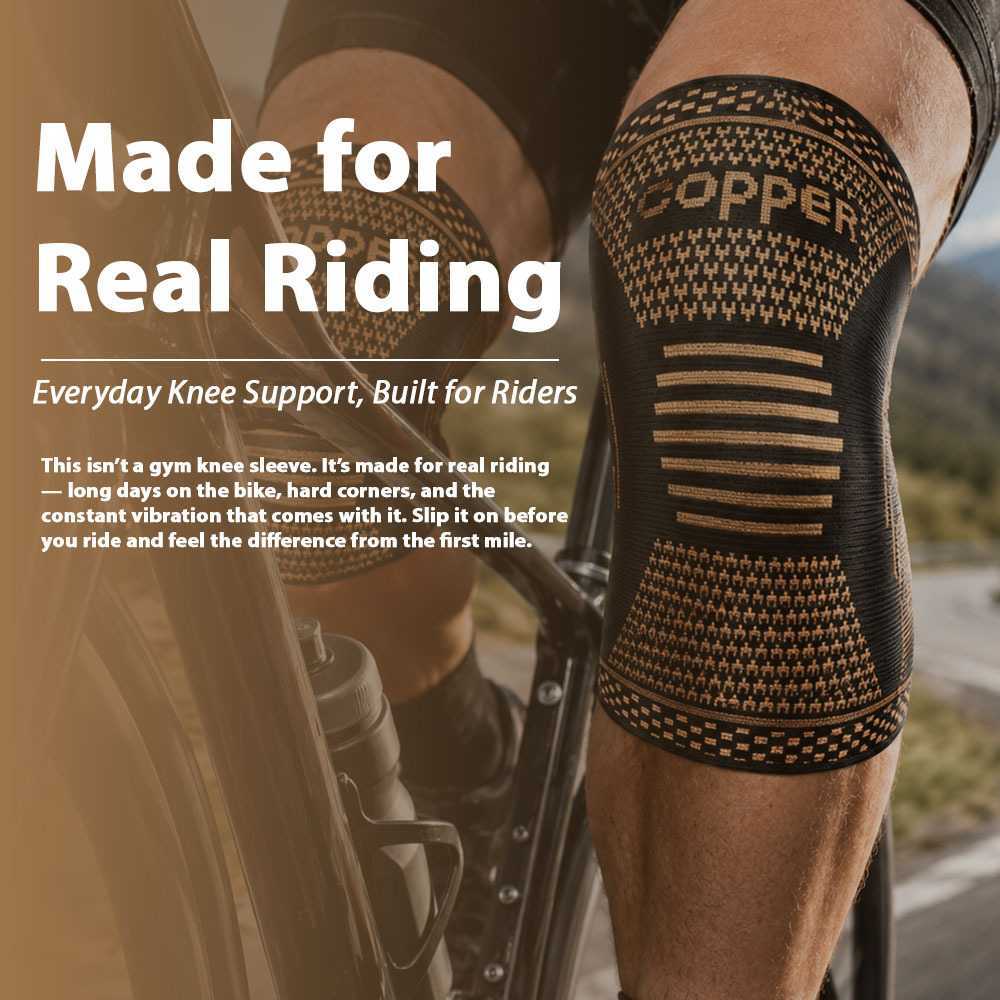
That’s what a proper compression knit does. Not a strap. Not a hinge. Not a gadget. Just consistent, even pressure that stays with the joint through every step, and a bit of warmth held in while it’s there.
How Compression Works
No batteries, no magnets, nothing to charge or replace. It’s the knit doing the work, and here’s exactly how.
A strap pulls tight across one line and digs in. A knitted sleeve does the opposite — it wraps the whole joint at once, above the knee, over it, and below it, so the pressure is shared right the way around.
Nothing pinches, nothing is left unsupported, and there’s no single point taking all the strain. That’s why a good sleeve can be worn for eight hours and a strap usually can’t.
The knit traps a layer of your own body heat against the skin and holds it there. Anyone over fifty knows what a cold knee feels like in February — stiff first thing, slow to loosen, worse in a draughty garage or on an early start.
Warmth won’t change what’s going on inside the joint, but it changes how willing that joint feels to move. For a lot of our customers this is the single thing they notice first.
This is the one nobody expects. Light, constant pressure on the skin keeps your brain fed with information about where that joint is and what it’s doing — without you having to think about it or look down.
The result is a knee that feels surer of itself. On stairs. On a gravel drive. Stepping off a kerb. Coming down a slope. People describe it as feeling more confident on their feet, and that confidence is often what gets them walking further again.
Spend all day on your feet, or all day sat in a car, and a hard-worked knee can feel thick and heavy by the evening. Gentle, even pressure held around the joint all day is what many people find keeps that end-of-day heaviness at bay.
It’s the reason so many wearers say the difference isn’t obvious at nine in the morning — it’s obvious at nine at night.
Getting It Right
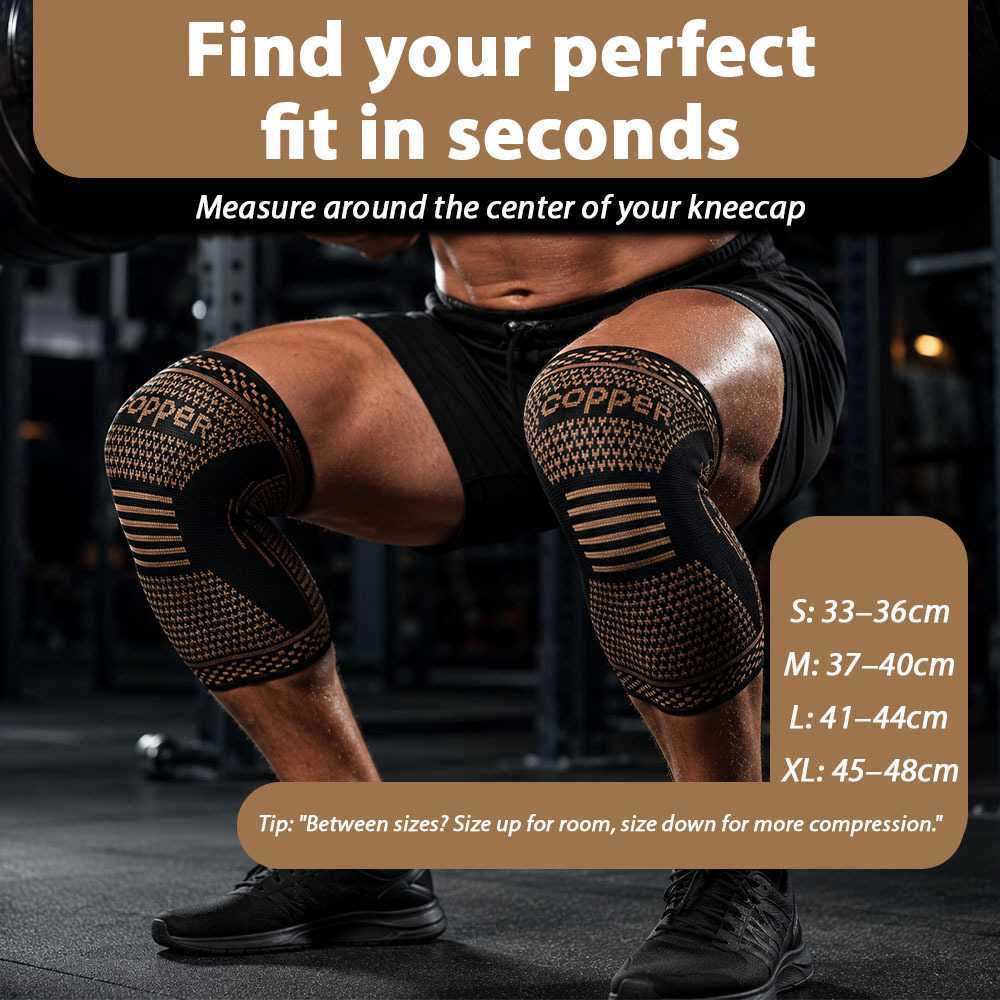
Compression only works inside a fairly narrow window. Too loose and it does nothing; too tight and you’ll take it off by lunchtime. Here’s how to know which side you’re on.
It creeps down your leg within the hour. You can’t really feel it’s on. Nothing feels any different at the end of the day. Go down a size.
A firm, even hug all the way round. You know it’s on, but you’re not counting the minutes. A finger still slides under the top edge.
Throbbing, pins and needles, a cold foot, or a deep mark left in the skin. Take it off and go up a size — tighter is not better.
If you’re between two sizes, take the larger one. A sleeve that’s slightly generous gets worn every day. A sleeve that’s slightly tight lives in a drawer.

And The Copper
Copper has been at the heart of what we’ve made since 2006, and we weren’t going to put our name on a plain nylon sleeve.
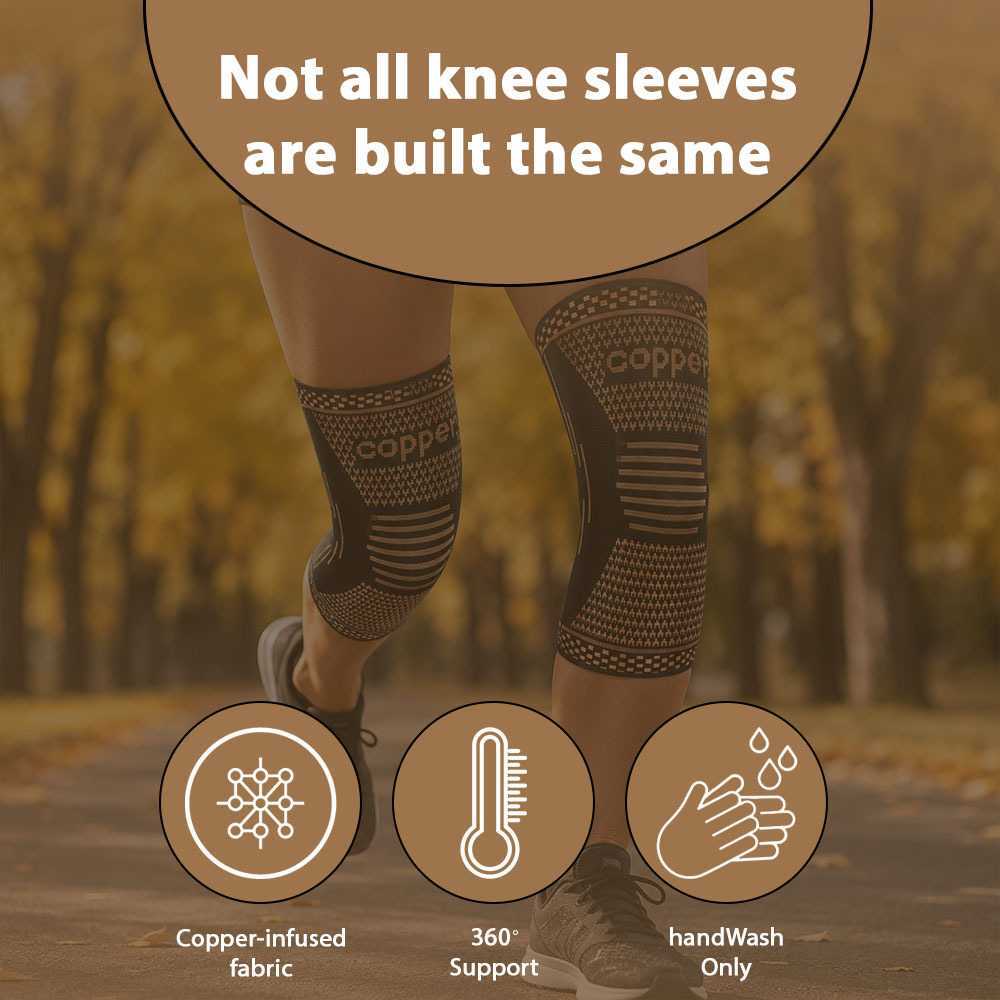
Here the copper is spun into the yarn itself rather than coated onto the surface, so it can’t wash out and it can’t rub off. Copper fibre is naturally antimicrobial — in plain English, it’s what keeps a sleeve you’ve worn five days running from smelling like one.
The support comes from the compression. The copper is what makes it a sleeve you’ll still be wearing next winter.
Wrist And Knee
You didn’t buy the bracelet because someone made you a promise. You bought it, you wore it, and you kept wearing it because you liked how it felt on.
This is the same deal. Put it on in the morning, wear it through the day, and judge it the way you judged the bracelet — on how you feel at the end of the week, not on what anybody claims.

Everyday Wear
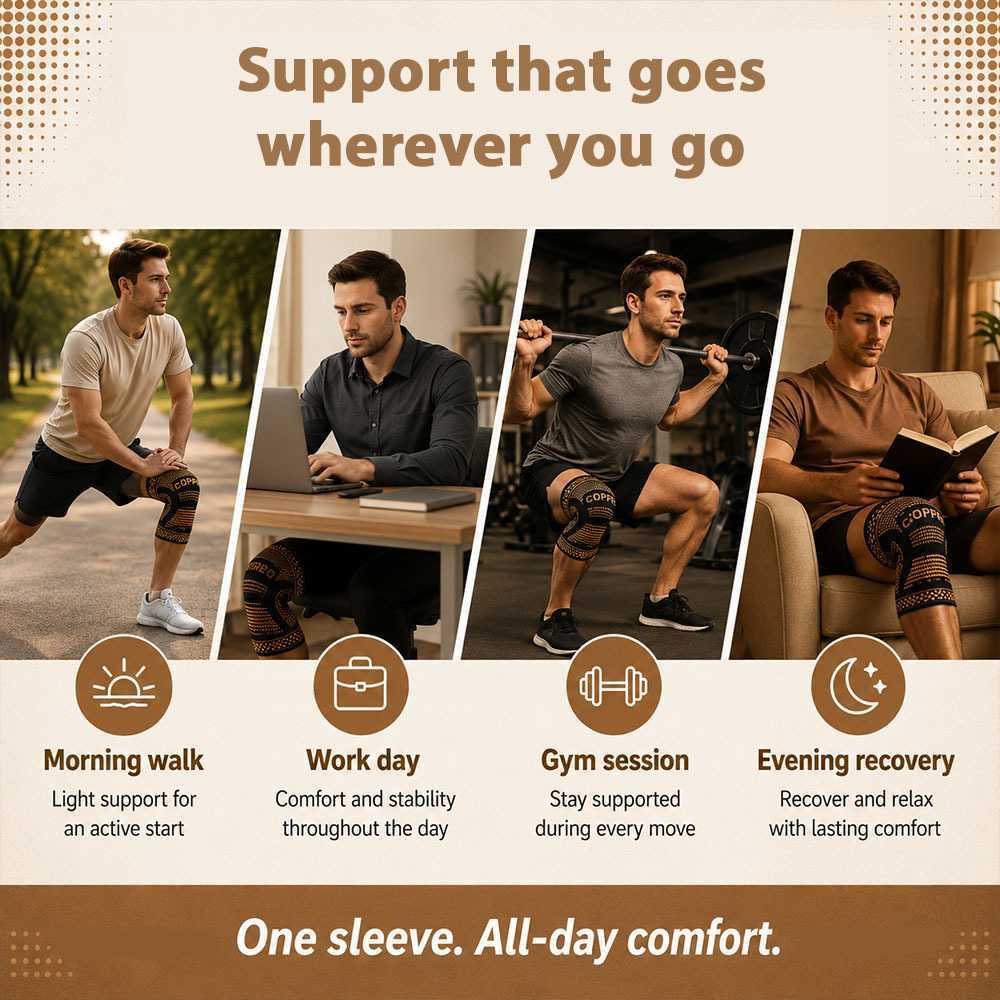
No straps to fiddle with, no buckles to catch, no velcro to wear out and no hinges to line up. You roll it on the way you’d put on a sock, and that’s the whole operation.
It sits flat enough to disappear under jeans, work trousers or a skirt, so nobody needs to know it’s there. Fits either leg, same sleeve for men and women, and it goes on and comes off in about ten seconds.

What It’s Really For
Nobody buys one of these for the sake of it. They buy it because there’s something they’ve quietly stopped doing — the long way round the park, the second lap of the garden centre, the hill they used to take without thinking.
That’s the whole point of it. Not the sleeve. What the sleeve lets you carry on doing.
Roll the sleeve down on itself, slide your foot through, then unroll it up the leg. Far kinder on the fabric and on your hands.
Sit the kneecap in the middle of the panel, with an even amount of fabric above and below it.
Run a hand round to flatten any bunching behind the knee. That’s where rubbing starts if you skip it.
They do different jobs. The bracelet is copper you wear. This is copper plus compression, and compression is what a weight-bearing joint like a knee actually wants — steady pressure, held warmth, and a steadier feeling underfoot. Plenty of our customers wear both, one on the wrist and one on the knee, for exactly that reason.
We can’t tell you how your knee will respond, and we’d be wary of anyone who says they can. What we can tell you is what the sleeve does: even pressure right around the joint, warmth held in, and a steadier feeling on your feet. Most people know within a day or two whether they like how that feels.
The support and the warmth are there the second you pull it on. Whether it adds up to better days is something you’ll judge after a week of ordinary wear — a few cold mornings, a few sets of stairs, one long day on your feet.
Yes, and most people do — on in the morning, off at night. Take it off overnight, and if you’re wearing it day after day give the skin a short break at some point. If your leg ever feels cold, numb or tingly, it’s too tight: take it off and go up a size.
Not if the size is right. If it’s creeping down within the hour, the sleeve is a size too big for you rather than faulty — get in touch and we’ll sort it.
Cold hand wash with mild soap, air dry flat. No tumble dryer, no bleach, no fabric softener — heat and softener are what destroy the stretch in any compression knit. The copper is inside the yarn, so washing won’t take it out.
No. Unlike our bracelets, this is a copper-infused compression sleeve — the support comes entirely from the knit. There are no magnets in it.
Why Try One
Nothing to swallow. Nothing to rub in. Nothing to book, remember or keep up. You pull it on in the morning and take it off at night, and if you don’t get on with it, you take it off and that’s that.
We’re a family business and we’ve been at this since 2006.